Most people think about smart home technology after they've moved in — a smart speaker here, a video doorbell there. But the homes where automation feels truly seamless are the ones where it was planned during construction, before the walls were plastered and the ceilings were closed.
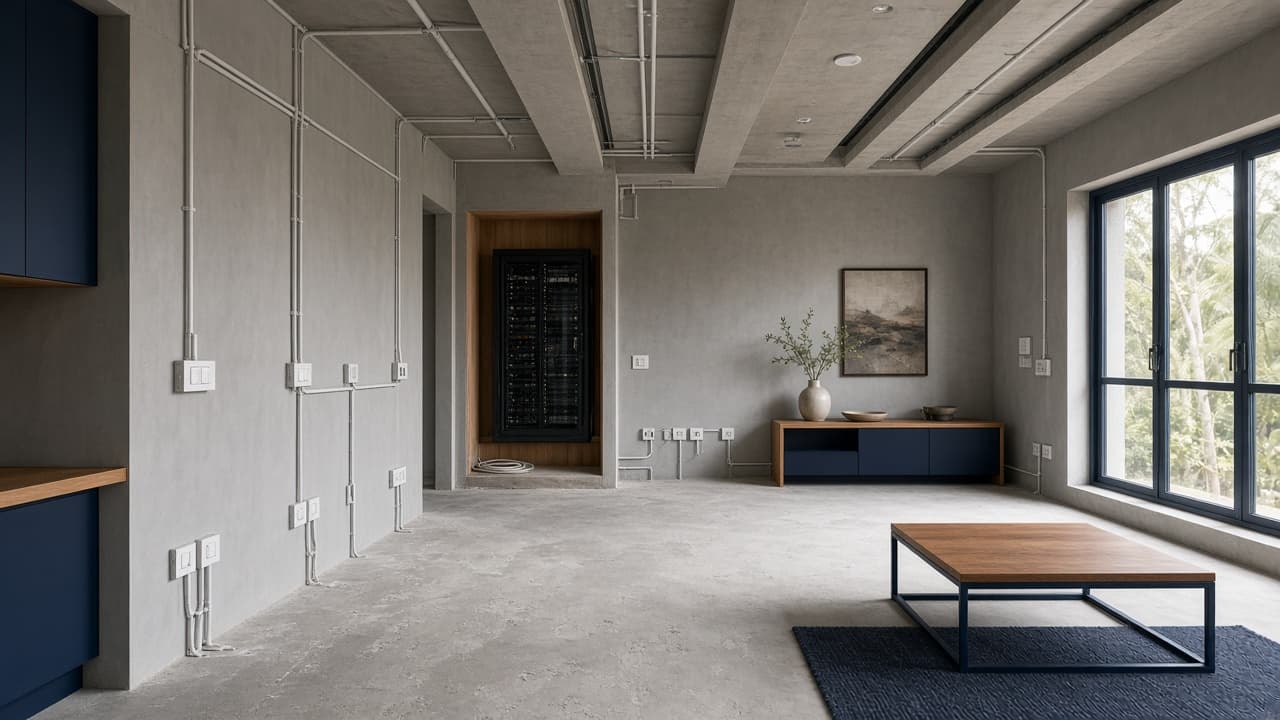
The reason is simple: smart systems are infrastructure. Lighting control, automated curtains, climate zoning, security sensors, and whole-home audio all depend on wiring, conduit paths, and power points that are cheap to install during construction and expensive to retrofit afterward. A conduit that costs a few hundred rupees during the build can cost thousands to chase through finished walls later.
Start with lighting. Decide which circuits you want dimmable or scene-controlled, and where keypads or touch panels should live. Think about how you actually move through the house — the switch you want at the top of the stairs, the 'goodnight' scene by the master bedroom door. These decisions are free on paper and painful after handover.
Next, plan your network backbone. Every smart device ultimately depends on robust connectivity. We recommend wired access points on each floor, a central network rack, and ethernet runs to TVs, desks, and entertainment units — even if you plan to use Wi-Fi. Wireless is convenient; wired is reliable.
Security and access deserve early thought too: camera positions with proper sightlines and power, door sensors, video doorbells, and smart locks all integrate far more cleanly when the wiring is in place. The same goes for motorized curtains and blinds, which need power and sometimes structural support at the pelmet.
At Ceezion, smart home planning is part of our interior and MEP design phase. We map your automation intent onto the electrical drawings, so the infrastructure is built in — not bolted on. Whether you want a fully automated villa or just the confidence that your home is ready for the future, the time to decide is before the concrete sets.