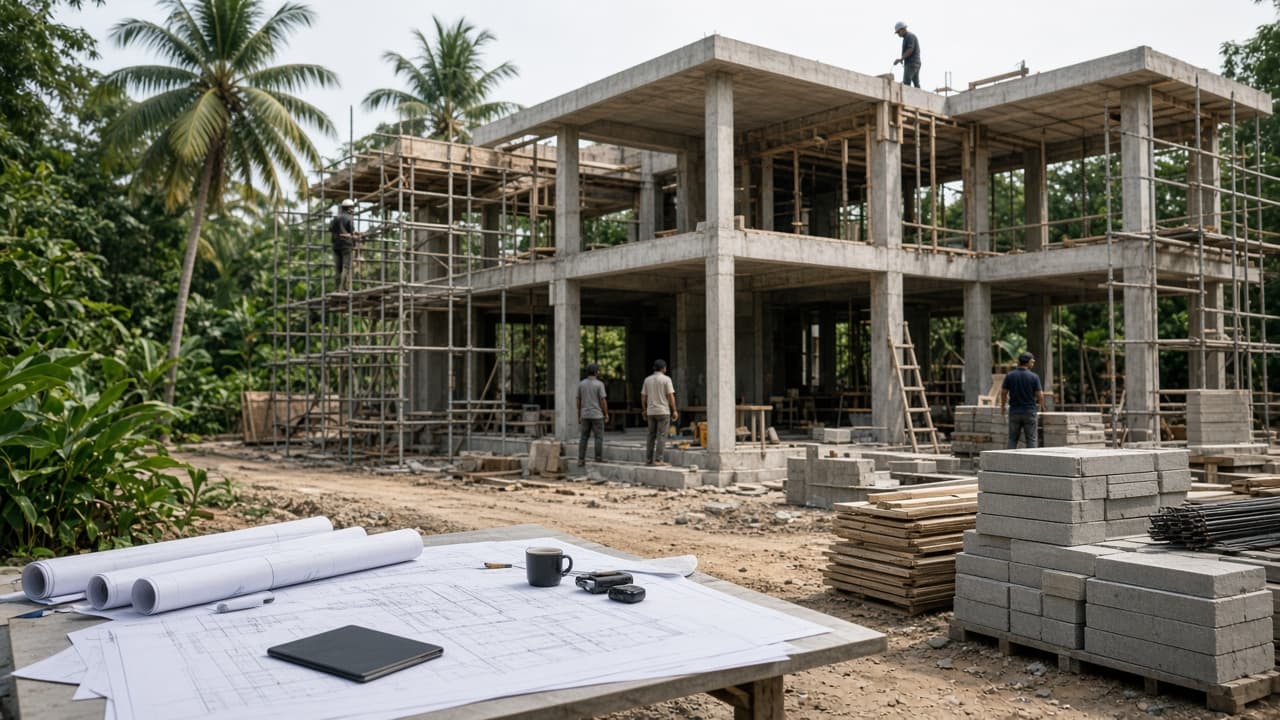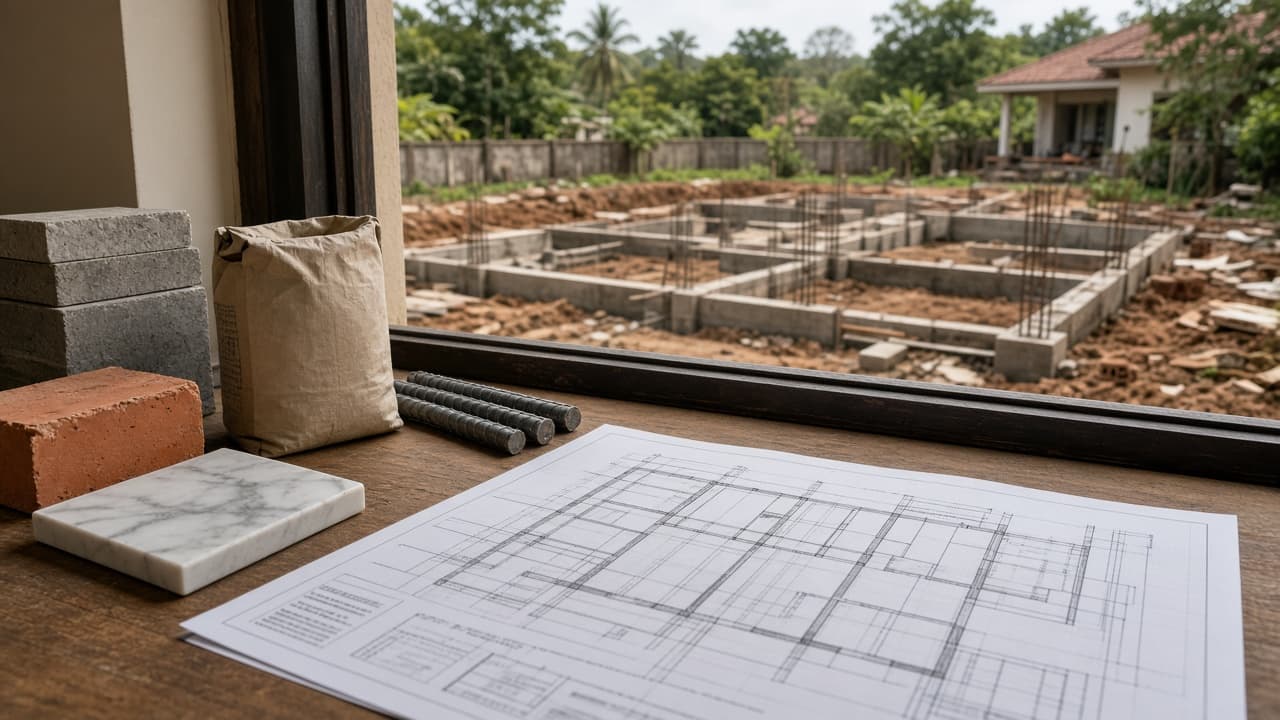
If you've ever wondered how modern buildings achieve those wide, column-free living spaces and impossibly thin floor slabs, the answer is usually Post-Tension (PT) construction. It's a structural technique that has powered high-rises, bridges, and stadiums for decades — and at Ceezion, we bring it to homes and commercial buildings across Kerala.
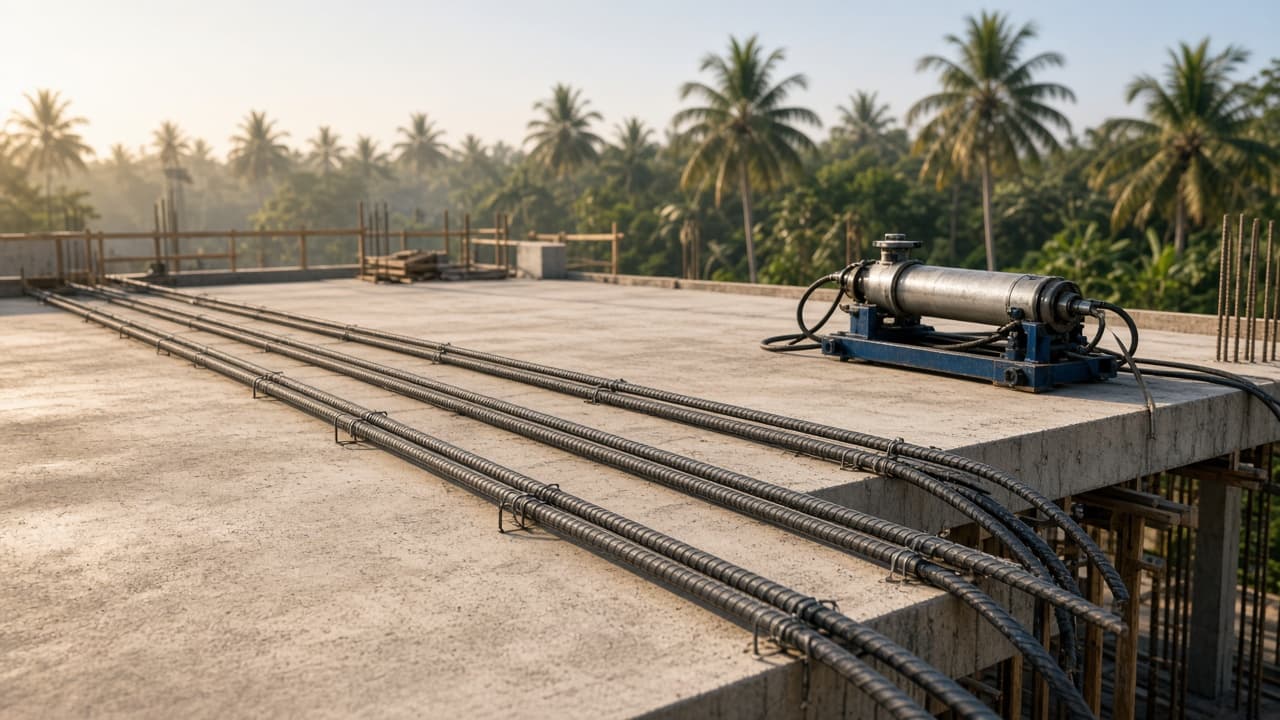
In conventional construction, a concrete slab relies on passive steel bars (rebar) for strength. The concrete has to be thick enough to resist bending under load, which means more material, more weight, and more columns breaking up your floor plan. Post-Tension flips this logic: high-strength steel tendons are laid through the slab and tensioned with hydraulic jacks after the concrete cures. The slab is literally squeezed into compression — and concrete under compression is extraordinarily strong.
The practical benefits for a homeowner are significant. PT slabs can span 30–40% further than conventional slabs, which means fewer columns and open, flexible living spaces. Slabs are typically 20–30% thinner, reducing the overall weight on your foundation — which in turn means a smaller, more economical foundation. Because the concrete is pre-compressed, cracks are dramatically reduced, and the structure performs better in seismic conditions.
There's also a timeline advantage. PT slabs can be stressed and loaded within days of pouring, rather than waiting weeks for conventional slabs to gain strength. On a typical Ceezion project, this shaves weeks off the structural phase — weeks you don't spend paying rent elsewhere.
Is PT right for every project? Not necessarily — very small, simple structures may not justify the engineering. But for homes with open floor plans, commercial spaces, multi-storey buildings, and any project where span, speed, or foundation economy matters, PT is often the smarter structural choice. Our structural team evaluates every project and recommends PT only where it genuinely adds value.
At Ceezion, PT design and execution are handled in-house — from slab design and tendon layout to stressing and quality assurance. It's one of the clearest expressions of what we mean by engineering excellence: using the best available technology, not just the most familiar one.